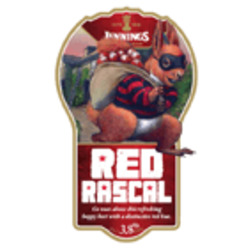
Jennings Brewery was founded in the village of Lorton (situated between Keswick and Cockermouth) in 1828 by John Jennings (1783 1876), son of William Jennings (1751 1848) who was a Malster by trade. Some oral traditions claim the original brewery in Lorton was either at Scales or High Swinside. Certainly John Jennings (Snr.) lived and farmed at Scales. He also bought High Swinside in 1845, but more probably the brewery first operated in buildings near to the present Lorton Village Hall which was originally built as a malthouse John's son, John Jennings Junior (1813 1889) was certainly involved in his father's business, but by 1851 John Junior's business was described in the census as thread manufacturer. The business had outgrown its home-brewed origins in Lorton and there was a need for a larger maltings and a building to house larger fermenting vessels. The nearest market town, Cockermouth, was the ideal base for expansion as it had a larger population with more opportunities to sell beer, and just as importantly the Castle Brewery site had an abundant supply of pure well water which has been used by the Castle as long ago as Norman times. Between the move to Cockermouth in 1874 and 1881, both sites at Lorton and Cockermouth operated under one proprietorship. in 1881, control was divided with John Jennings Junior's three sons assuming control of the Cockermouth site. Joseph Henry Jennings (1856 1899) became Head Brewer, Isaac Gaitskill Jennings (1852 1916) was Chairman and John Brown Jennings (1856 1896) was Vice Chairman. In 1887 the brothers converted the concern into a limited company. At that time the business consisted of 3 maltings and 16 licensed outlets. Many acquisitions of small breweries and public houses were made over the ensuing years. Four West Cumberland breweries were acquired in 1921 and Faulders Brewery of Keswick in 1926 Including a number of public houses. There no longer exists any Jennings connection with the business. As the only independent brewer in Cumbria, 2005 saw the acquisition of Jennings Brewery by Marston's PLC — a move which saw great benefits for the Cockermouth site. Plans were very quickly put in place to further invest in the brewery, which was very much linked to the potential volume growth of the beers. Today, pure Lakeland water is still used for brewing, drawn from the brewery's own well, and only the finest ingredients are added. The real art is in the brewing itself, where the Head Brewer and his team use their years of experience and traditional brewing methods to create a range of superb Lakeland Ales. The traditional values which the Jennings family instilled in the business are still respected, and combined with a modern day commercial approach, they have undoubtedly contributed to the success of Jennings ales today.
Why pay more?
Our Angels support independent winemakers by investing £25 a month into their Naked Wines account, to spend whenever they want - in return for discounts, freebies, exclusive wines and more.
Smart move - you've found the Sweet Spot
When it comes to wine, a small step in price = a HUGE leap in quality and taste.
By spending £8-£11 for a bottle of wine, you're actually getting more than DOUBLE the quality of wine than a £6-£7 bottle.
Here's how it works...
In your average £6-£7 wine most of the price goes on fixed costs like taxes, duty, bottling and transport... leaving fewer pennies for the wine itself.
But by spending just a pound or two more, the majority of those fixed costs stay the same, so more pennies are going straight into the stuff you can actually taste, creating a big leap in quality.
Review changes
You started a but didn't finish it. What would you like to do?
Sorry, we don't support your browser!
We only support Internet Explorer from version 11.